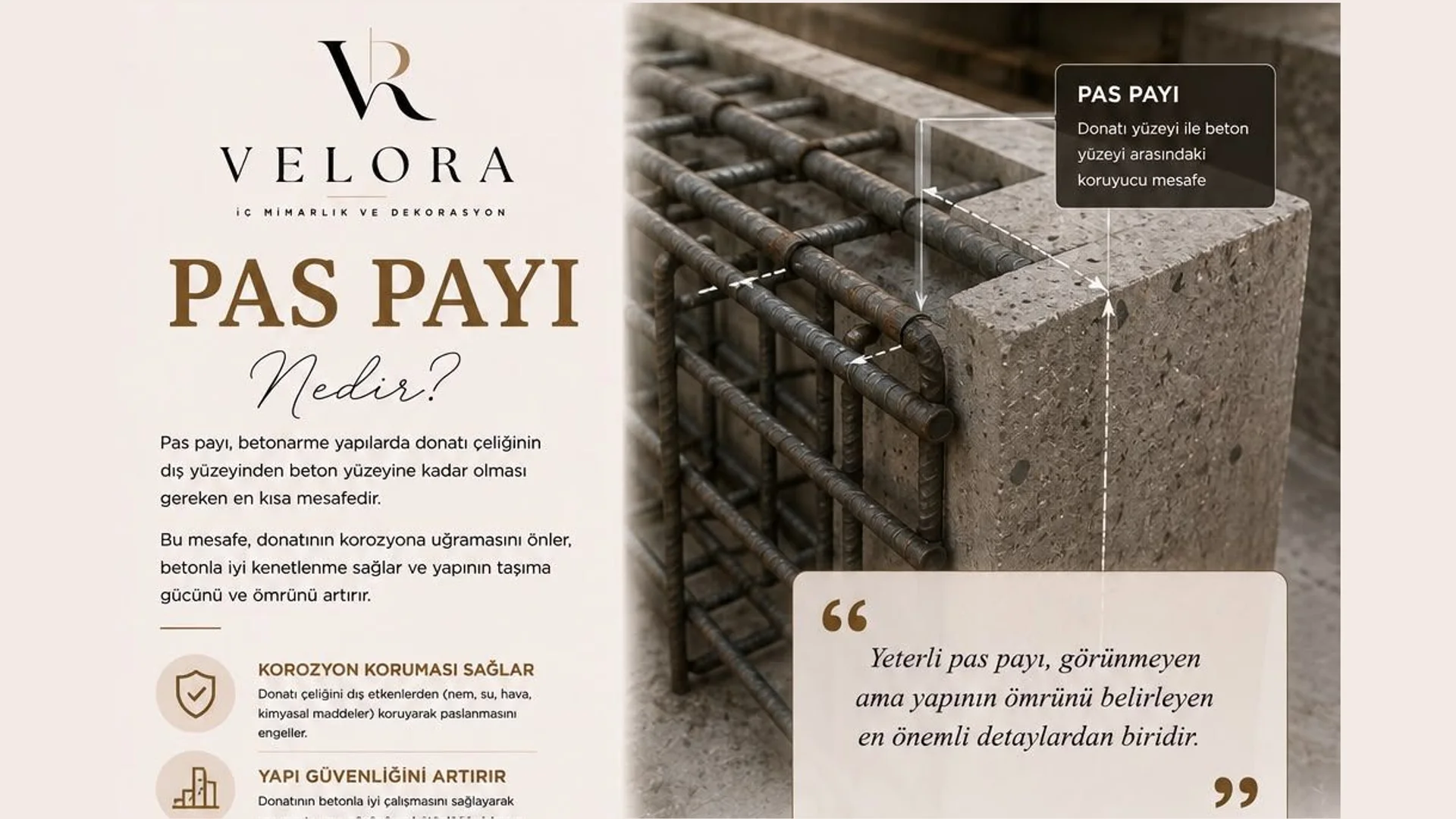
The shortest distance from the outer face of the rebar to the concrete surface. Too little and the steel corrodes, the concrete spalls.
Concrete cover is the shortest distance from the outer face of the reinforcement to the surface of the concrete. It keeps the steel from corroding, ensures bond with the concrete and directly extends the load capacity and the life of the structure.
What it provides
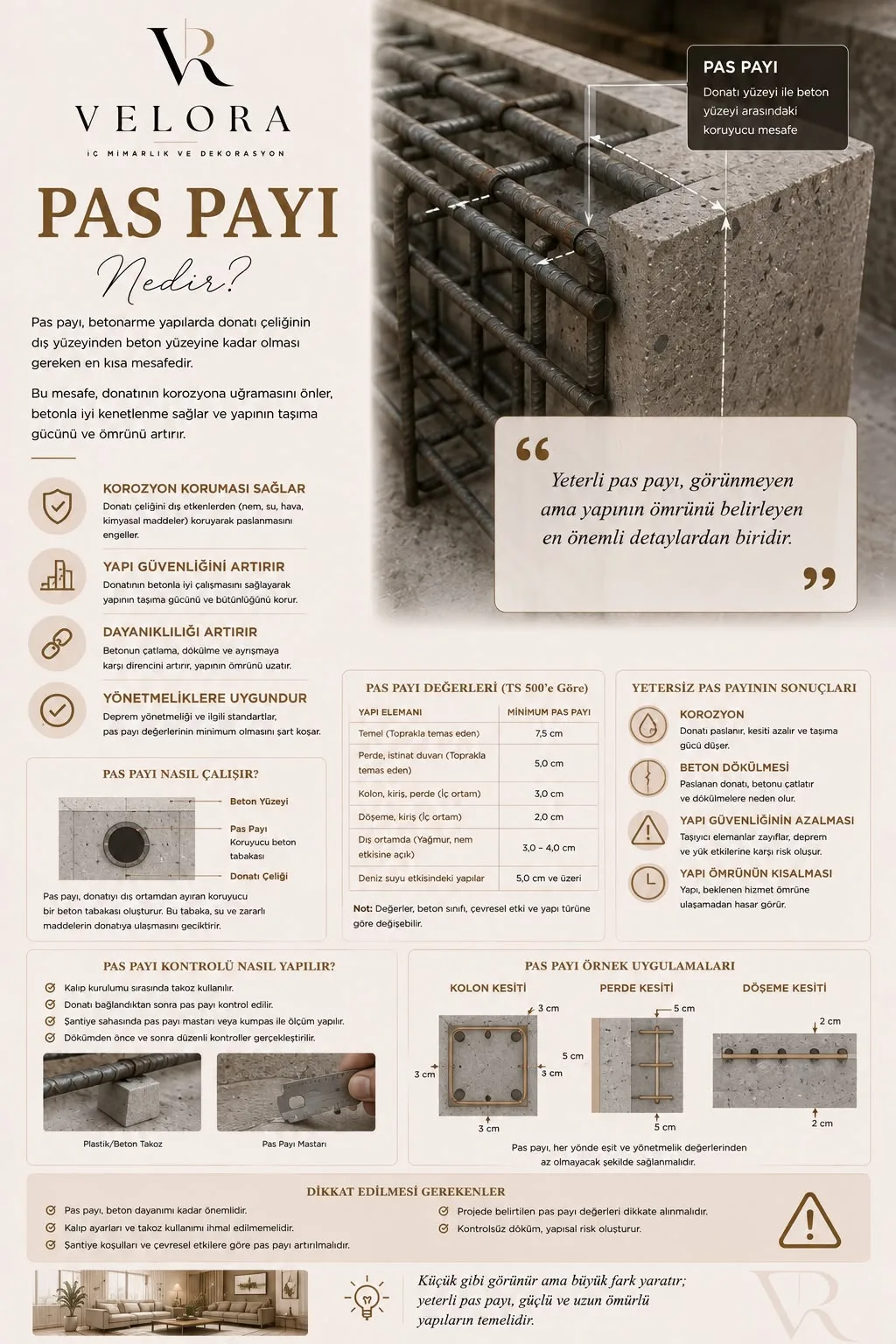
- Corrosion protection: shields the steel from moisture, water, air and chemicals.
- Structural safety: lets steel and concrete work together, preserving capacity and integrity.
- Durability: raises resistance to cracking, spalling and disintegration.
- Code compliance: seismic codes set minimum cover values as a hard requirement.
How it works
Cover is a protective concrete layer separating the reinforcement from the outside world. It delays the arrival of water, air and harmful substances. The alkalinity of concrete forms a passive film on the surface of the steel — a film that only survives if the cover is thick enough.
Typical minimum values
- Foundations in contact with soil: 7.5 cm
- Retaining and basement walls in contact with soil: 5.0 cm
- Columns, beams and walls indoors: 3.0 cm
- Slabs and beams indoors: 2.0 cm
- Exposed to rain and damp: 3.0 – 4.0 cm
- Marine exposure: 5.0 cm and above
What insufficient cover leads to
- Corrosion: the bar rusts, its section shrinks, capacity drops.
- Spalling: rusting steel expands, cracks the concrete and pushes it off.
- Reduced safety: load-bearing elements weaken and become a seismic risk.
- Shorter life: the building is damaged before it reaches its design life.
How it is checked
- Plastic or concrete spacers are placed during formwork.
- Cover is checked by eye and by gauge once the bars are tied.
- A cover gauge or calliper is used for measurement on site.
- Checks are repeated before and after the pour.
Tagsbetonarmedonatıkorozyon