The thin, smooth layer that prepares a wall for paint. How flat the wall looks and how the paint reflects both start here.
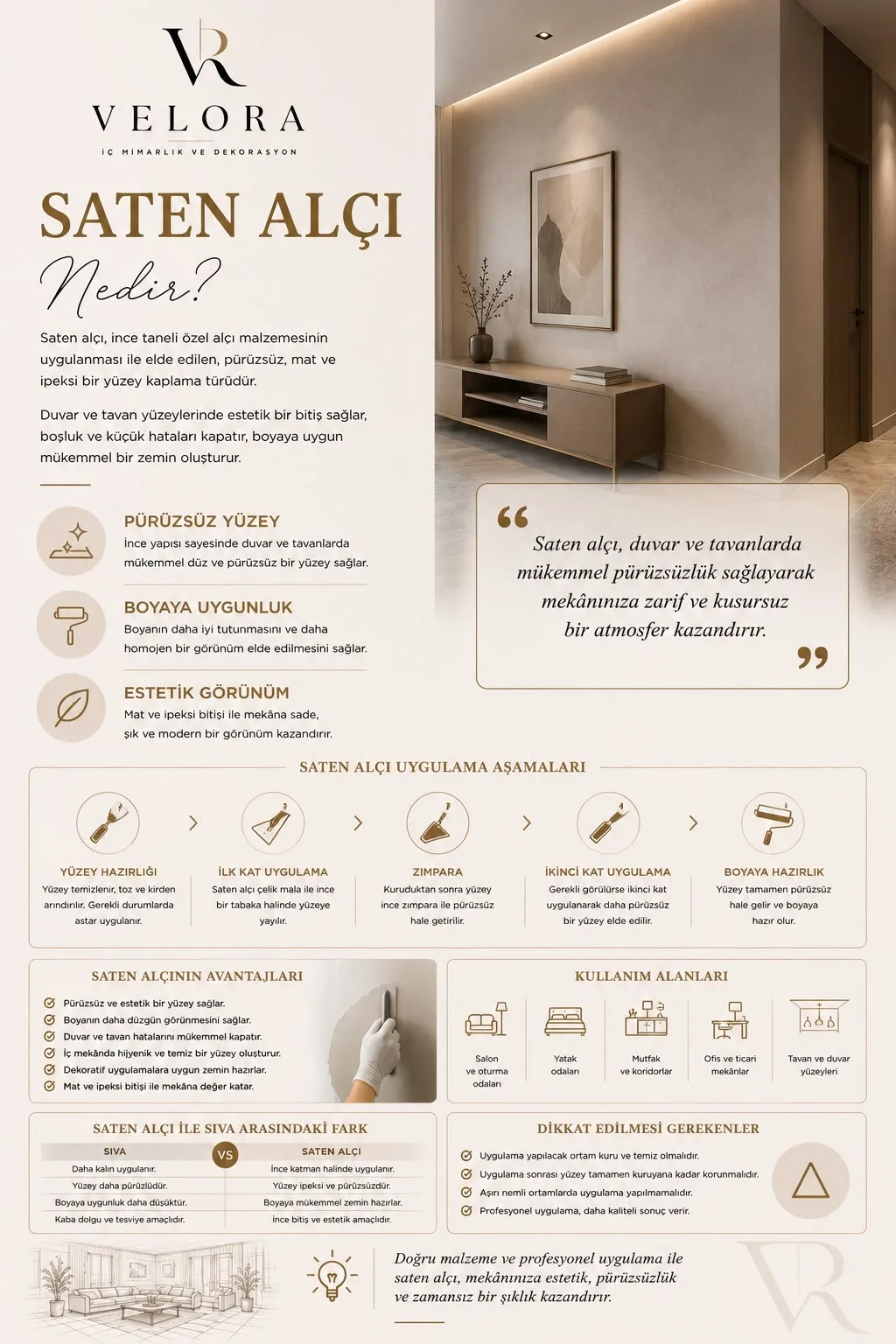
Skim coat plaster is the thin, smooth finishing layer applied over base plaster or plasterboard to prepare a wall for paint. It closes small undulations, removes trowel marks and lets paint take evenly.
What it gives you
- A smooth surface: flat enough that the hand feels nothing.
- Paint savings: lower absorbency means fewer coats.
- Light quality: a flat wall spreads light evenly, leaving no shadow lines.
Stages of application
- Preparation: dust, grease and loose material are removed; a primer is applied where needed.
- Mixing: plaster is sprinkled into clean water, mixed lump-free and left briefly to stand.
- First coat: pulled thin and even with a steel trowel.
- Second coat: applied before the first has set, then polished.
- Sanding and check: once dry the wall is checked in raking light and lightly sanded if needed.
Base plaster versus skim coat
- Base plaster: thick, establishes the flatness of the wall, leaves a coarse face.
- Skim coat: millimetric, does not create flatness — it polishes the flatness already there.
A wall that is out of true will not be fixed by skimming; it has to be brought into line with base plaster first.
Points to watch
- In wet rooms use waterproof products instead of gypsum skim.
- Never re-wet plaster that has begun to set; its strength drops.
- Painting before the wall is dry causes staining and blistering.
- Over-sanding dusts the surface and paint struggles to bond.
Tagsalçıduvarboya öncesi