
The protective cap over garden walls, parapets and retaining walls. Without the right slope and drip edge the wall degrades within a few winters.
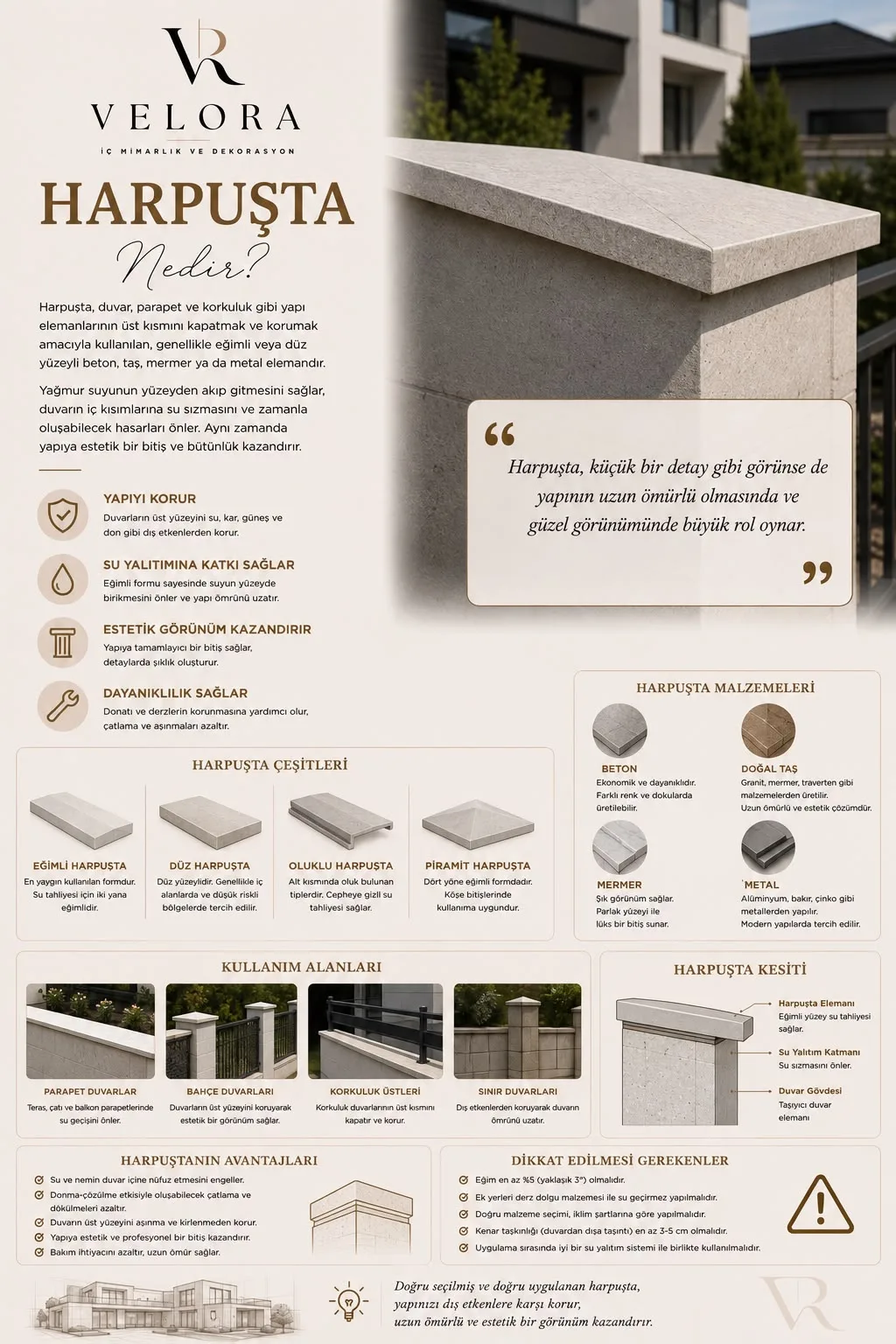
Coping is the protective cap that covers the top surface of garden walls, retaining walls, parapets and balcony upstands. It throws water clear of the wall, protects it against frost and staining, and gives the wall a finished top line.
What it does
- Waterproofing: stops rain soaking into the body of the wall.
- Frost protection: with no water inside, the freeze–thaw cycle cannot crack the masonry.
- Finish: completes the top of the wall with a clean line.
Profiles
- Sloped: falls one way, shedding water to the garden side.
- Flat: modern and plain, with a slight fall to both sides.
- Channelled: a groove down the middle directs water to a chosen point.
- Pitched: the classic double-sloped shape used on traditional garden walls.
Materials
- Precast concrete: economical, durable, made to any size.
- Natural stone: andesite, basalt or travertine — long lived and full of character.
- Marble: a prestige finish for courtyards and entrance walls.
- Metal: aluminium or galvanised steel — thin, light and contemporary.
Rules of a correct installation
- The top face needs at least 5% fall; a truly flat coping holds water.
- Leave a 3–5 cm overhang on both sides.
- Cut a drip groove underneath — without it water runs back onto the wall and leaves dirt streaks.
- Seal the joints with a flexible, exterior grade sealant.
Points to watch
- A waterproof membrane belongs under the coping.
- Rigid cement joints crack with movement; use a flexible joint.
- Size follows wall thickness — a narrow coping protects nothing.
Tagsharpuştadış cephebahçe duvarı