The vertical face of a step. One or two centimetres out and the stair tires you; get it right and you never notice it.
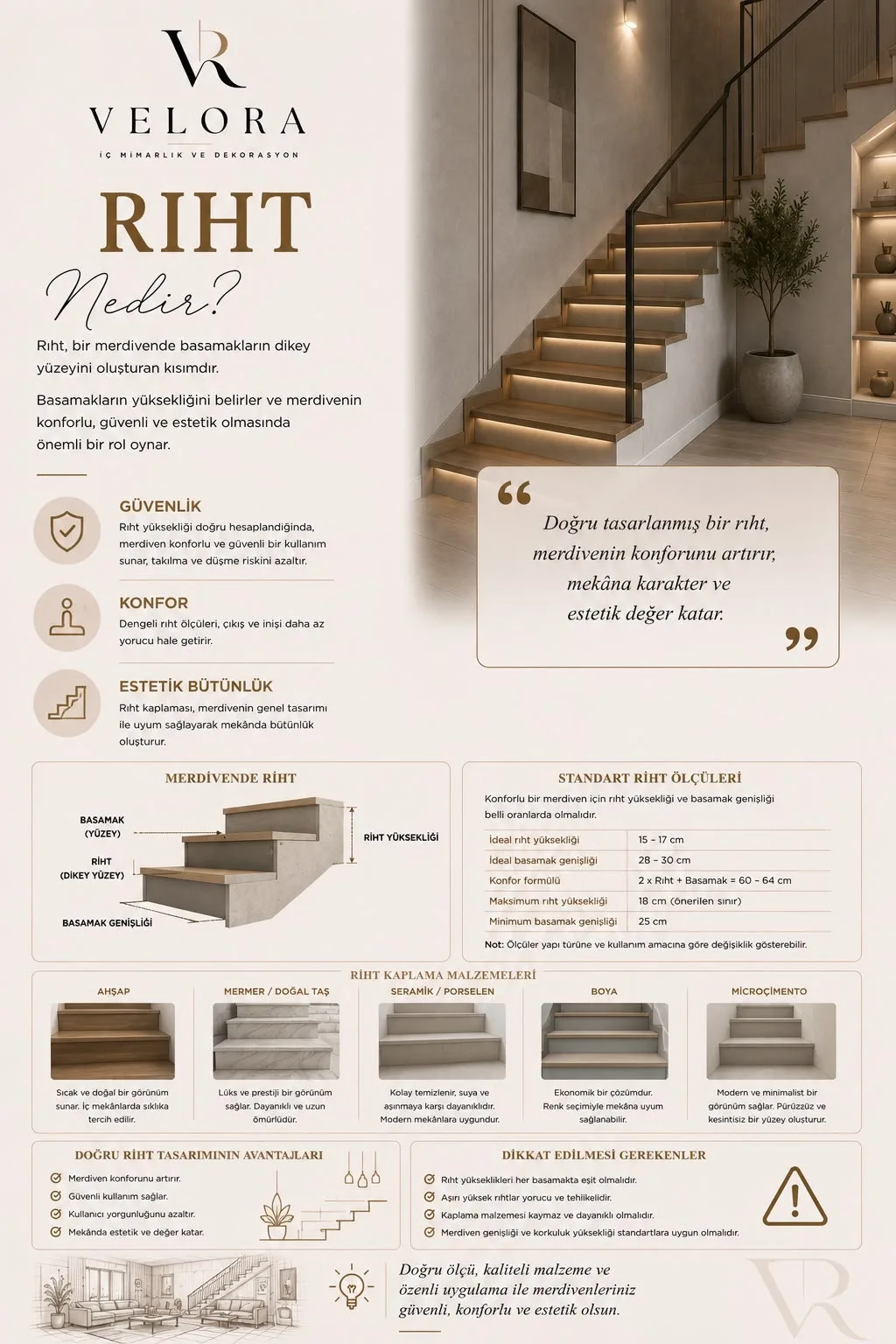
The riser is the vertical face of a step. It sets the height of each step and plays a decisive part in how comfortable, safe and elegant a staircase feels.
Why it matters
- Safety: a correctly calculated riser reduces the risk of tripping and falling.
- Comfort: balanced dimensions make going up and down markedly less tiring.
- Visual coherence: the riser finish ties the stair into the design of the room.
Standard dimensions
- Ideal riser height: 15 – 17 cm
- Ideal tread depth: 28 – 30 cm
- Comfort formula: 2 × riser + tread = 60 – 64 cm
- Maximum riser height: 18 cm (recommended limit)
- Minimum tread depth: 25 cm
Values vary with building type and use; public buildings and escape stairs are held to stricter limits.
Riser finishes
- Timber: warm and natural, the usual choice indoors.
- Marble or natural stone: a prestige look, durable and long lived.
- Ceramic or porcelain: easy to clean, resistant to water and wear.
- Paint: the economical solution, adaptable through colour.
- Microcement: modern and minimal, giving a smooth seamless surface.
What good riser design gives you
- A more comfortable stair.
- Safer use.
- Less fatigue on long flights.
- Aesthetic value for the space.
Points to watch
- Riser heights must be equal on every step — even 5 mm of variation causes stumbling.
- Excessively tall risers are tiring and dangerous.
- The finish must be slip resistant and hard wearing.
- Stair width and balustrade height must meet the standards.
Tagsmerdivenölçükonfor