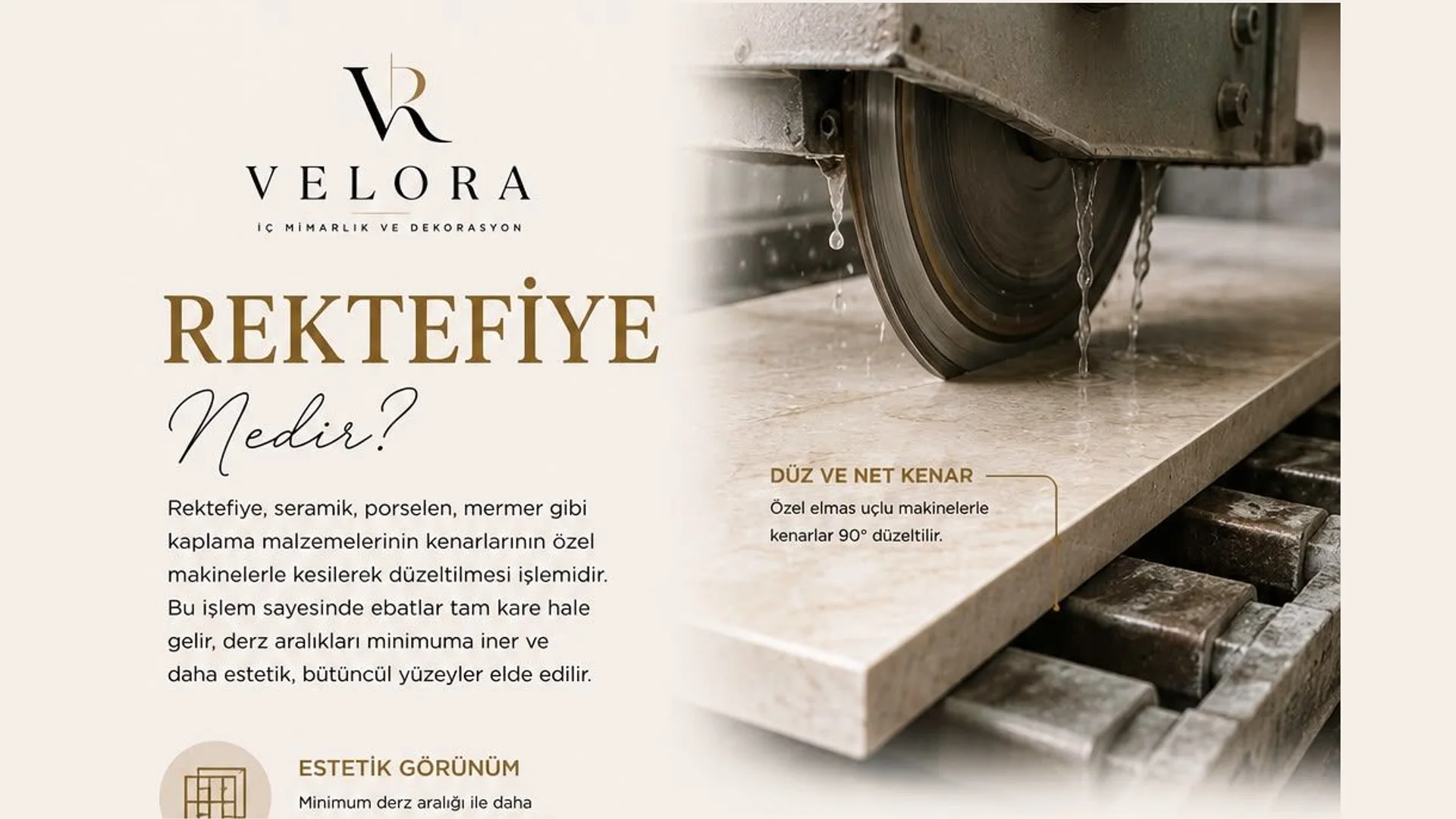
Machining the edges of ceramic, porcelain or marble true. Joints drop to a minimum and the surface reads as a single plane.
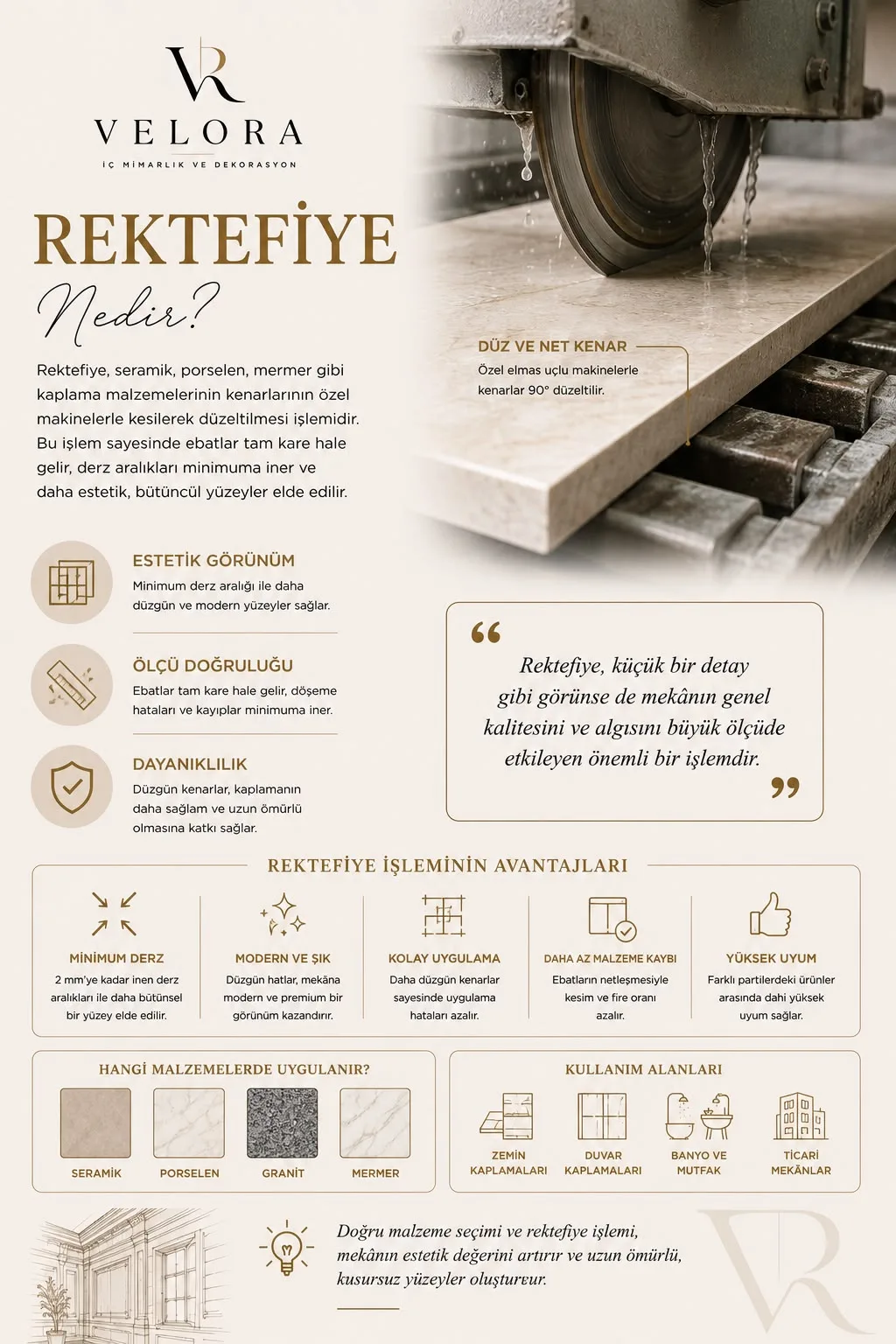
Rectification is the process of machining the edges of ceramic, porcelain or marble tiles perfectly true. The pieces become exactly square, joints shrink to a minimum and the finished surface reads as one continuous plane.
What it gives you
- A cleaner look: minimal joints produce a flatter, more modern surface.
- Dimensional accuracy: pieces are exactly square, so setting-out errors and waste drop.
- Durability: true edges help the covering last longer.
Advantages
- Minimum joint: joints down to 2 mm give a genuinely continuous surface.
- Modern and refined: straight lines give the room a premium feel.
- Easier laying: true edges reduce installation error.
- Less waste: exact sizes cut down offcuts and breakage.
- High consistency: pieces from different production batches still match.
Which materials
Ceramic, porcelain, granite and marble. It is most common on large format porcelain — the bigger the piece, the more critical edge accuracy becomes.
Where it is used
Floor coverings, wall claddings, bathroom and kitchen surfaces, and commercial interiors.
Points to watch
- A rectified tile does not mean no joint — always leave at least 2 mm; the material moves.
- The edges are sharp, so guard the corners during handling and laying.
- On an uneven substrate a rectified tile shows every level difference; screed quality matters more.
- In wet areas a narrow joint makes the quality of the grout far more critical.
Tagsseramikderzkaplama