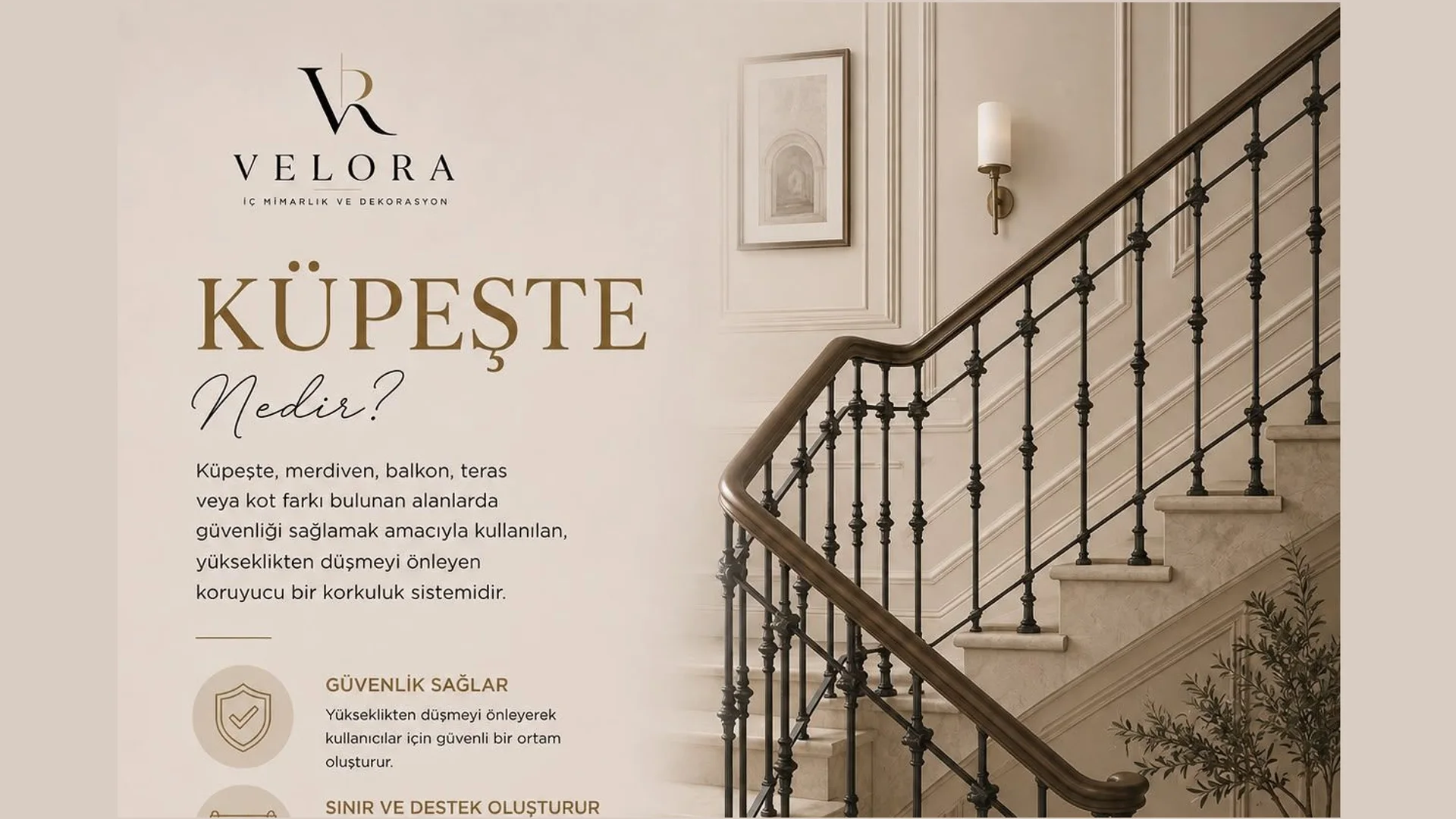
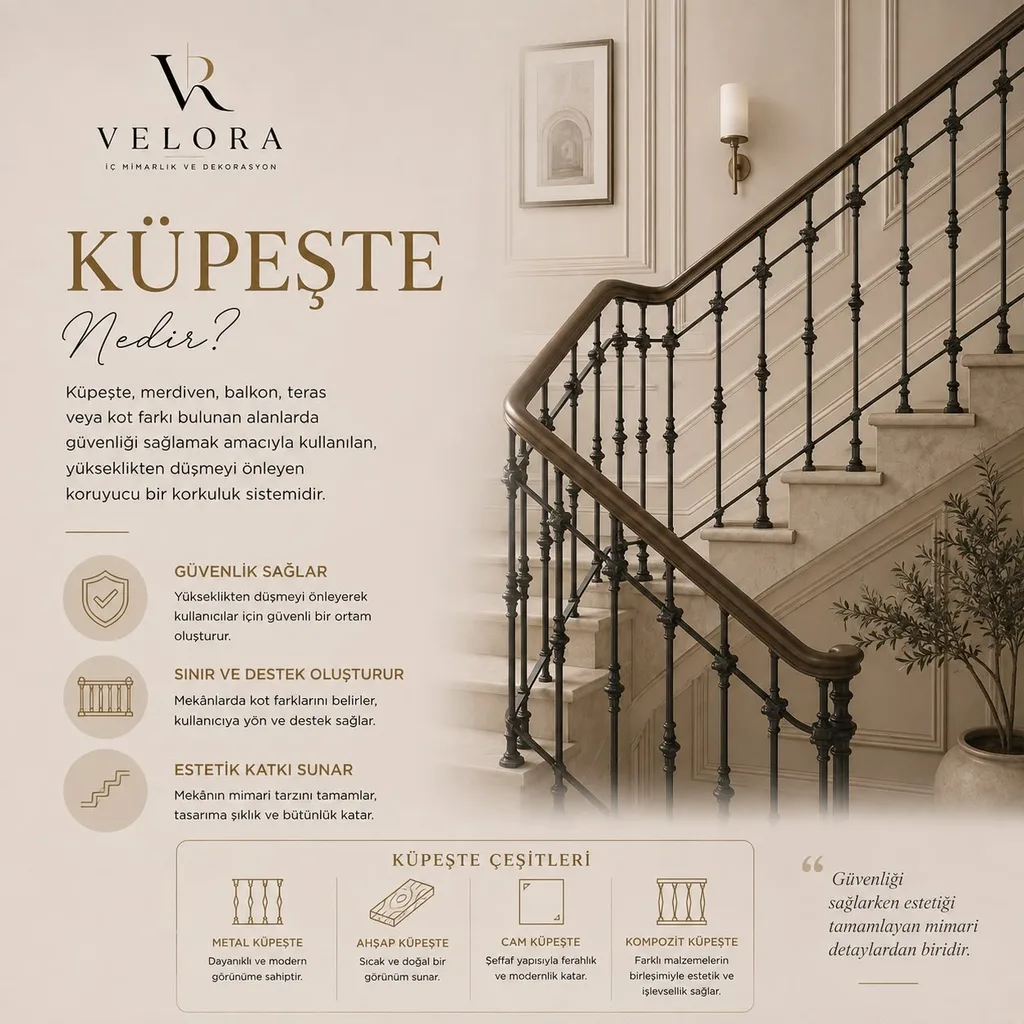
The protective balustrade system that prevents falls on stairs, balconies and terraces.
A handrail and balustrade system is used on stairs, balconies, terraces and anywhere with a change of level, to keep people from falling.
What it does
- Provides safety: creates a secure environment by preventing falls from height.
- Defines edges: marks level changes and gives the user direction and support.
- Adds design value: completes the architectural language of the space.
Types
- Metal: durable and modern, in either wrought or plain profile form.
- Timber: warm and natural, and never cold to the touch.
- Glass: transparent, light and modern — it does not interrupt the view.
- Composite: combines materials for both looks and performance.
Dimensions and standards
- Minimum balustrade height is 90 cm in dwellings and 110 cm on balconies and terraces.
- The clear gap between vertical members must be no more than 10 cm so a child cannot pass through.
- The rail should be rounded for a comfortable grip and continuous along the flight.
- Horizontal members are climbable and are not recommended where there are children.
Choosing materials
Indoors, timber and metal together give both warmth and strength. Outdoors, stainless steel or powder coated aluminium is the sound choice; wrought iron needs regular maintenance.
Points to watch
- Fix the anchors into the structural body, not into the tread nosing.
- Glass balustrades must use laminated toughened glass.
- Continue the rail horizontally at the top and bottom of the flight.
Tagsmerdivenkorkulukgüvenlik